
The Best Fluffy Pancakes recipe you will fall in love with. Full of tips and tricks to help you make the best pancakes.


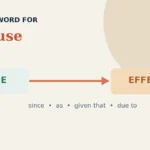
The most useful another word for because is since. It swaps in almost anywhere and keeps your sentence the same length.
As, given that and due to are the next best picks. Which one fits depends on one detail: what comes right after it.
This guide sorts 28 synonyms for because by that detail and by tone. Each one comes with a plain example you can copy.
You will also see the two grammar traps that catch most writers. One involves due to. The other is whether you can start a sentence with because.
Which word should replace because?
Use since or as in everyday sentences. Use given that or in that when you write in an essay. For a noun, as in because of the rain, switch to due to or owing to. To sound relaxed, try seeing as.
Here is the fast version. Find your situation in the left column.
| If you want to | Use | Why it works |
|---|---|---|
| Keep it casual | since, seeing as | Both sound natural in speech and texts. |
| Sound formal in an essay | given that, in that | They signal careful reasoning. |
| Explain with a noun, not a clause | due to, owing to | They work exactly like because of. |
| Give credit for a good result | thanks to | It carries a positive tone. |
| Tie the reason to a recent change | now that | It points to a new situation. |
| Blame several causes at once | what with | It groups a pile of reasons together. |
| Name a feeling behind an action | out of | It shows motive, as in out of fear. |
| Write a legal or official notice | on the grounds that | It is standard in rulings and policies. |
Why does the next word decide your synonym?
Because takes a full clause with its own subject and verb. Because of takes only a noun or noun phrase. Every synonym follows one of these two patterns. Mixing them up causes the most common error, such as due to it rained.
Look at the words right after your because. That tells you which group to pick from.
| Pattern | What follows | Example |
|---|---|---|
| because | A clause (subject and verb) | We stayed inside because it rained. |
| because of | A noun phrase | We stayed inside because of the rain. |
If you see a subject and a verb, choose from the first two groups below. If you see a noun, choose from the third group. Picking any another word for because without this check is how good sentences break.
The 28 Alternatives, Sorted by What Comes Next
Not every another word for because is a true synonym. Some only fit certain contexts. Each note below tells you which.
Everyday swaps when a clause follows (1 to 6)
1. Since
The safest general swap. It works in speech, emails and essays. It can also mean time, which we cover further down and in our guide to another word for since.
Example: Since the store was closed, we ordered online.
2. As
Common in British English and in formal writing. It often opens the sentence, where the reason sets up the main point. Like since, it can also point to time.
Example: As the bus was late, I walked to work.
3. Seeing as / seeing that
A relaxed choice for a reason the listener can already see. Merriam-Webster lists seeing as a conjunction with this meaning.
Example: Seeing as you’re up, could you make coffee?
4. Now that
Use it when a new situation creates the reason. It links the cause to a recent change, so it works for updates and announcements.
Example: Now that the rain has stopped, we can walk home.
5. Considering that
It suggests you weighed the reason before deciding. It fits both speech and writing.
Example: Considering that the roads are icy, we should leave early.
6. ‘Cause or cuz
Clipped forms of because used in speech, songs and texts. Keep them out of school and work writing.
Example: I left early ’cause I was tired.
Formal swaps for essays and reports (7 to 14)
7. Given that
A strong choice in an essay. It presents the reason as an accepted fact before you build on it.
Example: Given that most of the town works at the mill, the closure hit hard.
8. In that
It explains in what way something is true. Use it to sharpen a claim you just made.
Example: The plan is risky in that it relies on one supplier.
9. Inasmuch as
A formal phrase meaning because or given that. Merriam-Webster’s entry for inasmuch as also lists a second meaning about extent. Make sure your reader can only read it one way.
Example: Inasmuch as the funds arrived late, the project slipped.
10. For
An older, literary way to give a reason. It joins two clauses and usually follows a comma. Save it for fiction or speeches.
Example: She left the party early, for she had a dawn flight.
11. On the grounds that
It names a reason that justifies a decision. You will see it in rulings, policies and appeals. It sounds firm, so use it when you want the reason to carry weight.
Example: The request was denied on the grounds that it came too late.
12. In view of the fact that
Accurate but wordy. Use it only when a formal tone matters more than brevity.
Example: In view of the fact that the hall is closed, the event will move online.
13. For the reason that
Another long formal option. In most sentences, plain because says the same thing in one word.
Example: He resigned for the reason that the board ignored his warnings.
14. The reason being that
It adds a reason after the main point, often as an afterthought.
Example: We booked the later flight, the reason being that it was cheaper.
Swaps for “because of” when a noun follows (15 to 27)
15. Due to
The most common swap for because of. Some teachers still flag it at the start of a sentence. The section below explains why that rule is outdated.
Example: The game was delayed due to lightning.
16. Owing to
The traditional partner of due to. It sounds slightly more formal.
Example: Owing to high demand, tickets sold out in an hour.
17. On account of
Neutral and a little old fashioned. It often explains a delay or a change of plans.
Example: The picnic moved indoors on account of the wind.
18. As a result of
It stresses cause and effect. It works well in reports and news writing, where the reader wants a clear chain of events.
Example: As a result of the merger, the head office moved to Ohio.
19. Thanks to
It usually gives credit for a good result. With a bad result it sounds ironic, as in “Thanks to the traffic, we missed the opening.” Pick it on purpose.
Example: Thanks to her quick thinking, nobody was hurt.
20. In light of
It means considering new information. It often comes before a decision or a change.
Example: In light of the new data, the team revised its forecast.
21. In view of
A formal cousin of in light of. It shows the reason shaped what happened next.
Example: In view of the storm warning, schools closed early.
22. Given
The short form of given that, followed by a noun instead of a clause.
Example: Given the cost, we decided to wait.
23. By virtue of
It means a quality or position caused the result. It is formal and often positive.
Example: She qualified by virtue of her experience.
24. By reason of
A legal and official phrase. Outside that setting it sounds stiff.
Example: The contract was void by reason of fraud.
25. What with
An informal phrase for several causes at once. Merriam-Webster’s entry for what with says it introduces the cause of something.
Example: What with work and the kids, I never finish a book.
26. Out of
It names the feeling or motive behind an action. It is not a general swap.
Example: He opened the letter out of curiosity.
27. Through
It points to a cause, often in fixed phrases. It is a related alternative, not a close synonym.
Example: She lost the job through no fault of her own.
Flip the sentence (28)
28. That’s why / which is why
Sometimes the best fix is to reverse the order. State the reason first, then the result. That moves you into result words, covered in our guide to words that mean so.
Example: The bridge was closed. That’s why we were late.
Is “due to” wrong at the start of a sentence?
No. Due to is standard English as a preposition meaning because of. An old rule said it could only follow be, as in “The delay was due to rain.” Merriam-Webster’s usage note on due to says that objection has no solid footing.
The old rule treated due to as an adjective and owing to as the preposition. Under it, “Due to rain, the match was canceled” counted as an error. Merriam-Webster notes the phrase has been accepted as standard for decades.
Some teachers and editors still follow the old rule. If yours does, open with owing to or because of instead. Nobody marks those wrong.
| Sentence | Old rule | Current view |
|---|---|---|
| The delay was due to rain. | Correct | Correct |
| Due to rain, the match was canceled. | Flagged | Standard |
| Owing to rain, the match was canceled. | Correct | Correct |
| Due to it rained, the match was canceled. | Wrong | Still wrong, because a clause follows |
The last row is the real mistake to watch. Due to needs a noun after it, never a full clause.
Can you start a sentence with because?
Yes, as long as the sentence is complete. “Because it rained, we stayed in” is correct. “Because it rained.” on its own is a fragment. Teachers often ban the opener to prevent fragments, not because the grammar is wrong.
Merriam-Webster’s entry for because calls the opener common, especially in newspapers and magazines. In a formal essay, since or as can sound smoother at the front. That is the main reason people look for another word for because to start a sentence.
What about “the reason is because”?
Some readers call it redundant. Merriam-Webster points out it has appeared in respected writing for centuries. Still, “the reason is that” avoids the argument completely. Use it in an essay.
Do you need a comma before because?
Usually not. Skip the comma when the reason is essential: “She left because she was sick.” Add one when the reason is an extra thought. Always put a comma after a because clause that opens the sentence.
A comma can also stop a sentence from being misread. Compare these two:
- I didn’t buy the car because it was red.
- I didn’t buy the car, because it was red.
The first can mean you bought it for some other reason. The second clearly means the color put you off. The comma tells the reader where the “not” belongs.
The same habits carry over when you choose another word for because. Since and as follow the same comma pattern. For almost always takes a comma before it.
Since or as: which one reads clearer?
Use because when the reason is the main news. Use since or as when the reason is background the reader may already know. Avoid both when time could be meant, as in “Since we moved, we’ve been happier.”
That last sentence has two readings. It could mean “from the time we moved” or “because we moved.” Fix it with ever since for time or because for reason.
As has the same problem. “As she was leaving, she cried” could mean during or because. When the meaning matters, choose the word that allows only one reading.
A Hypothetical Rewrite: One Paragraph, Four Reasons
Here is a sample student paragraph we wrote to show the fix. It uses because four times.
Before: I chose this topic because I love history. It matters because people forget the past. Many wars started because of greed. We should study them because they teach hard lessons.
After: I chose this topic out of a love of history. It matters, given that people forget the past. Many wars started due to greed. We should study them since they teach hard lessons.
Each swap matches its pattern. Out of and due to take nouns. Given that and since take clauses.
You do not need to replace every because, though. One plain because in a paragraph reads fine. A good another word for because should fix repetition without making the paragraph sound stiff.
The same fix works for other repeat words. If also keeps showing up, try these synonyms for also. For contrast, see our but synonyms.
Frequently Asked Questions
What is another word for because in an essay?
The best another word for because in an essay is given that or since. For a noun, use owing to or because of.
What’s another word for because to start a sentence?
The smoothest another word for because at the start is since. As and given that also open a sentence well. Due to and owing to work there too when a noun follows.
Is since another word for because?
Yes. Since is the closest another word for because when it introduces a reason. It can also mean “from a time in the past,” so check that your sentence has only one reading.
What is the opposite of because?
English has no single opposite. Words like although and despite show a reason that failed to stop something. See our list of alternatives to although.
What does “just because” mean?
It stresses that a reason is not enough: “Just because it’s cheap doesn’t mean it’s good.” On its own, “just because” means for no special reason.
What’s another word for “because of this”?
Try for this reason, as a result or that’s why. Each one points back to a reason you already gave.
Conclusion: The Short Version
This guide covered 28 ways to replace because, sorted by what comes after the word. It also settled two old worries about due to and opening a sentence with because.
Since and as are the easiest another word for because in everyday writing. Given that and in that suit formal work. Due to and owing to replace because of when a noun follows.
Key takeaways:
- Check the words after your because before you swap.
- A clause needs a clause word, such as since or given that.
- A noun needs a noun word, such as due to or owing to.
- Due to at the start of a sentence is standard English.
- Avoid since and as when a reader could hear a time meaning.
The Oxford Learner’s Dictionaries entry for because traces the word to the Middle English phrase “by cause.” Centuries later, writers still need ways to explain why. Browse the full Tellyffy synonym library for more word guides like this one.



[…] If because is your repeat word instead, try these synonyms for because. […]
[…] your paragraph keeps giving reasons, try these synonyms for because. If it keeps adding points, these also synonyms will […]
[…] words pile up too. Try these words for because and our and […]
[…] A plainer version of for this reason. Keep the two sides straight: so gives the result while because gives the cause. For words on the cause side, see these synonyms for because. […]